
There is a frustrating stage in many fitness journeys that does not receive nearly as much attention as the exciting beginning.
At first, progress seems obvious.
Exercises that once felt difficult become easier. Confidence improves. Workouts become more familiar. Someone may notice greater energy, better movement, improved strength, or changes in how their clothes fit.
Then something happens.
Progress appears to slow down.
The person is still training. They are still showing up. They have not suddenly stopped caring about their health. Yet the improvements that once seemed to arrive regularly become harder to notice.
This experience is often described as a fitness plateau.
At Under The Bar, we believe a plateau does not automatically mean someone needs to train harder, exercise every day, or completely abandon their current routine. Often, it is an opportunity to look more closely at programming, recovery, lifestyle, goals, and how progress is being measured.
For adults throughout Ottawa, Kanata, Nepean, Barrhaven, Orleans, Stittsville, and surrounding communities, understanding why progress slows can help prevent frustration from turning into another abandoned fitness routine.
Sometimes the solution is not more effort.
It is better direction.
First, What Is a Fitness Plateau?
A fitness plateau is generally a period when progress appears to slow or stop despite continued training.
What that looks like depends on the person’s goal.
Someone may notice that:
- Their usual weights are no longer increasing.
- Their workouts feel repetitive.
- Their endurance seems unchanged.
- Motivation has declined.
- Physical changes have slowed.
- Certain exercises are no longer improving.
- Training feels more like maintenance than progression.
It is important to recognize that progress is rarely perfectly linear.
The body does not improve at exactly the same rate every week.
Some periods produce noticeable changes.
Others are quieter.
That does not automatically mean the program has failed.
Early Progress Can Create Unrealistic Expectations
When people begin training, they often improve relatively quickly.
They are learning new movements, developing coordination, becoming more consistent, and introducing their bodies to new physical demands.
These early improvements can create the expectation that progress will always continue at the same speed.
Usually, it does not.
As someone becomes more experienced, further improvement may require greater attention to details such as programming, exercise selection, recovery, and progression.
This is normal.
The fact that progress becomes slower does not make it less meaningful.
Your Body Adapts to What You Repeatedly Ask It to Do
Adaptation is one of the reasons training works.
The body encounters a challenge and gradually becomes better prepared to handle it.
But adaptation can also explain why doing exactly the same routine indefinitely may eventually stop producing the same results.
If someone performs the same exercises with the same resistance, repetitions, and overall training demand month after month, the body may no longer receive much reason to adapt further.
Purposeful training therefore requires some form of progression over time.
Progression Does Not Only Mean Adding More Weight
One of the most common misconceptions about progressive training is that every workout should involve heavier weights.
Progress can happen in many ways.
Someone might improve by:
- Performing more controlled repetitions
- Improving technique
- Increasing range of motion
- Adding repetitions
- Increasing resistance appropriately
- Improving exercise consistency
- Developing better movement quality
- Managing the same workload more comfortably
This broader view is particularly useful for adults whose goals extend beyond simply lifting the heaviest possible weight.
Your Program May No Longer Match Your Goal
Fitness goals change.
Someone may originally begin training to establish a routine.
Months later, they may want to improve performance for cycling, hiking, golf, recreational hockey, or another activity.
Another person may shift toward healthy aging, mobility, or greater everyday energy.
If the goal changes but the training program does not, progress can feel disconnected.
At Under The Bar, we believe programming should evolve with the individual.
A routine should serve a purpose.
When the purpose changes, the routine may need to change too.
Random Workouts Can Make Progress Difficult to See
Variety can make exercise interesting.
But constant randomness creates another problem.
If someone performs completely different workouts every time they train, it becomes difficult to determine whether anything is actually improving.
There is little opportunity to practice movements, develop skill, or compare performance.
Effective programming usually involves enough consistency to measure progress while still introducing changes when they serve a reason.
The goal is not doing something new every workout.
It is doing something useful.
Training Harder Is Not Always the Solution
When progress slows, many people respond by increasing everything.
More workouts.
More repetitions.
More cardio.
More intensity.
Longer sessions.
This can occasionally be appropriate, but it should not be the automatic response.
If someone is already struggling to recover, adding more work may simply increase fatigue.
Before increasing training demands, it can be useful to consider whether the person is recovering from their current program.
Sleep Can Influence Training Progress
Imagine two people following identical training programs.
One regularly gets sufficient rest.
The other sleeps inconsistently because of work deadlines, family responsibilities, or late nights.
Their experiences may be very different.
Training is only the stimulus.
The body still needs opportunities to recover.
Sleep is one part of that process.
For busy professionals throughout Ottawa, Kanata, and surrounding communities, improving the overall training picture sometimes requires looking beyond gym hours.
Stress Can Hide Progress
A demanding period at work can change how training feels.
So can family responsibilities, travel, poor sleep, and other life pressures.
Someone may still be physically improving while feeling less energetic because their total workload has increased elsewhere.
This is why one difficult workout should not be used to judge an entire fitness program.
Context matters.
Fitness exists inside life—not separately from it.
Nutrition May Need to Match Activity
Training requires energy.
Someone who significantly increases their physical activity without considering their overall nutrition may eventually find workouts harder to sustain.
Nutrition does not need to become complicated or obsessive.
However, regular eating habits, adequate hydration, and an overall approach that supports an active lifestyle can contribute to consistency and recovery.
People with specific dietary or medical needs should seek guidance from appropriately qualified professionals.
Your Technique May Be the Limiting Factor
Sometimes adding more resistance is not the best way forward.
Movement quality may need attention first.
An exercise may become more productive after adjustments to:
- Setup
- Position
- Tempo
- Range of motion
- Breathing
- Control
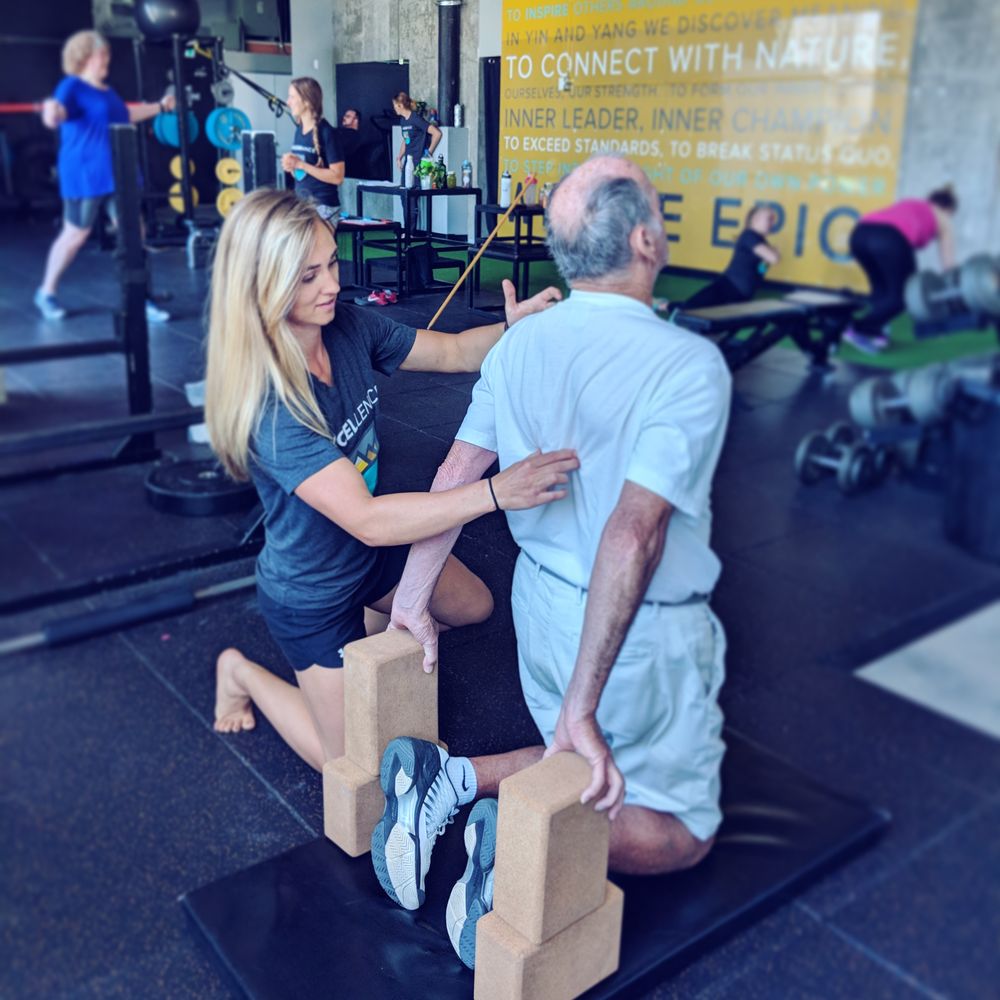
This is one area where coaching can provide significant value.
It can be difficult to notice your own movement habits while simultaneously performing an exercise.
An outside perspective can identify details that are easy to miss.
You May Be Measuring the Wrong Things
Progress is often reduced to a small number of measurements.
Body weight is perhaps the most common.
But someone’s scale weight does not reveal whether they:
- Move better
- Have become stronger
- Feel more energetic
- Can hike farther
- Have improved balance
- Perform daily activities more comfortably
- Have become more consistent
If someone is measuring only one outcome, they may overlook meaningful improvements happening elsewhere.
A plateau in one area does not necessarily mean nothing is changing.
Maintenance Can Sometimes Be a Success
There are seasons when maintaining current fitness is a perfectly reasonable objective.
Consider an Ottawa professional entering an extremely demanding period at work.
Perhaps family responsibilities have also increased.
If that person maintains a regular training routine instead of abandoning exercise entirely, that may represent an important success.
Not every month needs to produce dramatic improvement.
Sometimes preserving established habits until life becomes less demanding is exactly the right strategy.
Motivation Can Decline When Training Becomes Repetitive
A plateau is not always purely physical.
Sometimes the person is simply bored.
They have performed the same routine for so long that training no longer feels engaging.
Purposeful variety can help.
That might involve:
- Learning a new movement
- Pursuing a different goal
- Adjusting the program
- Preparing for a recreational activity
- Introducing a new training phase
The important distinction is that change should have a reason.
Random novelty can be entertaining, but purposeful variation supports longer-term development.
A New Goal Can Bring Training Back to Life
Sometimes the easiest way to restore motivation is to give training a meaningful destination.
For Ottawa-area adults, that goal does not need to involve a fitness competition.
It could be preparing for:
- A hiking trip
- Cycling season
- Golf
- Recreational hockey
- Skiing
- A physically active vacation
- Greater everyday mobility
- A personal performance milestone
When training connects to something someone genuinely wants to do, individual workouts can feel more meaningful.
Different Seasons Can Create Natural Training Phases
Ottawa’s changing seasons provide an excellent opportunity to vary training priorities.
Winter might involve greater emphasis on structured indoor training.
Spring could prepare someone for cycling, golf, running, or hiking.
Summer may involve more outdoor recreation.
Autumn can become an opportunity to reassess goals before winter.
Training does not need to remain identical throughout the year.
Different phases can support different priorities while maintaining an overall fitness foundation.
Experienced Exercisers Still Benefit From Coaching
Some people assume personal coaching is primarily for beginners.
Beginners certainly benefit from learning exercise technique and gym fundamentals.
But experienced exercisers can also reach a point where they need a new perspective.
They may know how to exercise but still struggle with:
- Programming
- Progression
- Exercise selection
- Accountability
- Goal setting
- Recovery management
Knowing many exercises is not the same as knowing how to organize them into an effective long-term plan.
Accountability Can Matter More During a Plateau
The early stages of fitness often come with built-in excitement.
Everything is new.
Progress is noticeable.
Motivation is high.
A plateau removes some of that immediate reward.
This is when accountability can become particularly valuable.
Scheduled training and professional coaching provide structure even when enthusiasm temporarily decreases.
Consistency can carry someone through periods when motivation alone is unreliable.
Sometimes You Need to Do Less, Better
Fitness culture frequently celebrates volume.
Longer workouts appear more impressive.
More exercises seem more serious.
More training days can look more committed.
But a program does not become effective simply because it contains more.
A smaller number of well-selected exercises performed consistently and progressed appropriately may provide more value than an unnecessarily complicated routine.
Quality matters.
Purpose matters.
Consistency matters.
Returning From a Break Is Not the Same as Starting Over
Illness, travel, work demands, family responsibilities, and vacations can interrupt training.
When people return, they sometimes feel discouraged because their previous performance is not immediately available.
This is not necessarily a true plateau.
It may simply be a rebuilding period.
Instead of attempting to prove that nothing was lost, it can be more productive to re-establish consistency gradually.
Previous training experience has not disappeared simply because someone took time away.
Comparison Can Make a Plateau Feel Worse
Social media makes it easy to compare one person’s quiet training period with another person’s biggest achievement.
That comparison rarely provides useful context.
The person online may have:
- Different goals
- More training experience
- Fewer responsibilities
- A different schedule
- Different genetics
- Different recovery circumstances
Progress should be evaluated according to the individual’s own program and objectives.
The useful question is not, “Why am I not progressing like that person?”
It is, “What does my next appropriate step look like?”
Plateaus Can Be Valuable Information
A plateau does not always need to be viewed negatively.
It can reveal that something deserves attention.
Perhaps the program needs progression.
Maybe recovery needs improvement.
The goal may have changed.
Technique may need refinement.
Training may have become inconsistent.
Or perhaps the person has simply reached a stage where progress naturally occurs more gradually.
Instead of becoming frustrated, the plateau can become a reason to reassess.
The Under The Bar Approach
At Under The Bar, we believe training should evolve.
The goal is not simply giving clients difficult workouts.
It is helping them understand where they are, where they want to go, and what kind of training can help bridge that gap.
Our coaching considers factors such as:
- Current fitness level
- Training history
- Movement quality
- Goals
- Lifestyle
- Recovery
- Recreational interests
- Consistency
For adults throughout Ottawa, Kanata, Nepean, Barrhaven, Orleans, Stittsville, and surrounding communities, personalized programming can provide direction when progress begins feeling uncertain.
Sometimes a plateau requires a new challenge.
Sometimes it requires better recovery.
And sometimes it requires recognizing that more progress has already occurred than the person realizes.
Final Thoughts
Reaching a fitness plateau can be frustrating, especially when someone is still putting in effort.
But stalled progress does not automatically mean the answer is exercising harder.
The more useful response is often to examine the entire picture.
Is the program still aligned with the goal?
Is there a clear progression strategy?
Is recovery adequate?
Has training become repetitive?
Are the right outcomes being measured?
For Ottawa adults pursuing sustainable fitness, these questions can transform a frustrating plateau into an opportunity to improve the approach.
Fitness is not a straight line.
There will be periods of rapid progress, slower progress, maintenance, adjustment, and renewed growth.
What matters is continuing to move forward with purpose.
Ready to Move Beyond the Plateau?
If you are consistently exercising but no longer feel as though your training is moving you toward your goals, Under The Bar can help you take a closer look at what comes next.
Our personalized coaching can provide the structure, progression, accountability, and purposeful programming needed to help make your training more effective and sustainable.
Contact Under The Bar to learn more about personalized fitness coaching for adults throughout the Ottawa area.
📞 Call: (343) 800-LIFT
📧 Email: underthebarpro@gmail.com
Stop guessing what comes next. Train with direction, progress with purpose, and keep moving forward with Under The Bar.