For many adults, changes in mobility happen so gradually that they are easy to overlook.
Perhaps getting down to the floor does not feel as effortless as it once did. Reaching overhead feels tighter. Turning to look behind while backing out of a parking space requires more effort. After several hours at a desk, the hips and back feel stiff when standing up.
None of these experiences necessarily arrives as one dramatic moment.
Instead, movement can slowly begin to feel different.
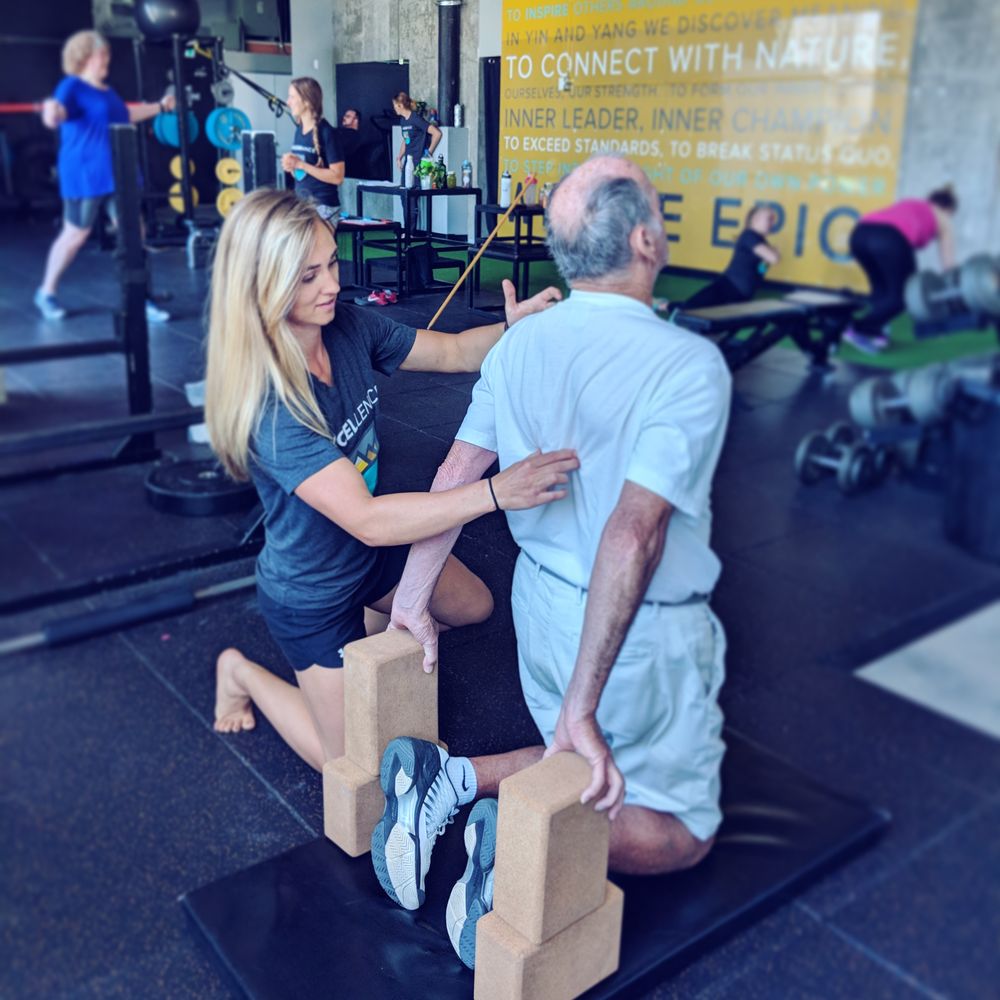
At Under The Bar, we believe fitness should help people remain capable in everyday life. Strength is certainly part of that equation, but mobility—the ability to move comfortably and effectively through useful ranges of motion—also deserves attention.
For adults throughout Ottawa, Kanata, Nepean, Barrhaven, Orleans, Stittsville, and surrounding communities, mobility-focused training can complement strength work and help create a body that is not only stronger but also better prepared for work, recreation, family activities, and daily responsibilities.
What Does Mobility Actually Mean?
Mobility and flexibility are often used as though they mean exactly the same thing.
They are related, but there is an important difference.
Flexibility generally refers to how much a muscle can lengthen.
Mobility involves the ability to actively control movement through a useful range of motion.
For example, someone may be flexible enough to move a joint through a certain range when stretching but still struggle to control that range during a squat, lunge, press, or everyday activity.
Effective fitness programming considers both movement range and control.
Why Mobility Can Change Over Time
The human body adapts to what it repeatedly does.
If someone spends much of the day moving through varied positions, the body regularly experiences different ranges of motion.
But many modern lifestyles involve long periods in similar positions.
Ottawa professionals may spend hours:
- Sitting at computers
- Driving
- Attending meetings
- Working remotely
- Looking at phones and other devices
Over time, limited movement variety can contribute to a feeling of stiffness.
That does not mean every desk worker needs an extreme stretching routine.
It means the body can benefit from regular opportunities to move.
The Hips Often Tell the Story of a Sedentary Day
The hips play a major role in walking, climbing stairs, squatting, lifting, and many recreational activities.
After long periods of sitting, some people notice that their hips feel tight or restricted.
Mobility-focused training can introduce controlled movements that encourage the hips to work through appropriate ranges.
Combined with strength training, this can help support more confident everyday movement.
The goal is not achieving impressive flexibility for its own sake.
The goal is useful movement.
Shoulder Mobility Matters Beyond the Gym
Shoulders are involved in countless daily tasks.
People use them when:
- Reaching into cupboards
- Putting luggage overhead
- Getting dressed
- Carrying objects
- Gardening
- Participating in sports
Limited shoulder movement can make these activities feel awkward.
Thoughtful training can combine mobility and strength so clients learn to control overhead and reaching movements more effectively.
Ankles Are Easy to Forget
Ankle mobility rarely receives much attention until it becomes limited.
Yet the ankles contribute to:
- Walking
- Running
- Squatting
- Climbing stairs
- Balance
- Hiking
Restricted ankle movement may influence how other parts of the body compensate during certain exercises.
This is one reason personalized coaching looks at movement as a connected system rather than focusing only on individual muscles.
Mobility and Strength Work Better Together
Mobility should not necessarily exist separately from strength training.
In many cases, the two complement each other.
Having access to a range of motion is useful.
Being able to control that range is even more valuable.
Strength training through appropriate ranges can help people develop both movement capacity and control.
At Under The Bar, we believe the objective should be building a body that can move and produce force effectively.
Stretching Alone Is Not Always the Complete Answer
When people feel stiff, their first instinct is often to stretch.
Stretching can certainly be useful, but stiffness can have many influences.
Sometimes the body also needs:
- Movement variety
- Strength
- Stability
- Better technique
- More frequent activity
This is why an individualized approach matters.
Rather than automatically prescribing the same stretches to everyone, coaching can help determine which movements make sense for the individual.
Mobility Can Improve Exercise Technique
Adequate movement capacity can make many exercises easier to perform effectively.
For example, mobility can influence someone’s ability to:
- Squat comfortably
- Reach overhead
- Perform lunges
- Hinge at the hips
- Rotate through the torso
When movement options improve, coaches may have greater flexibility in exercise selection and progression.
Everyday Movement Is the Real Test
A fitness program should provide benefits beyond the training session.
Improved movement can become noticeable in surprisingly ordinary situations.
A person may find it easier to:
- Get up from the floor
- Tie their shoes
- Reach into a cupboard
- Carry groceries
- Move around the garden
- Enter and exit a vehicle
These improvements may not generate dramatic transformation photographs, but they can meaningfully affect quality of life.
Mobility Becomes Increasingly Valuable With Age
As people move through adulthood, maintaining movement options becomes increasingly important.
The goal is not necessarily to become extremely flexible.
Instead, it is to preserve enough mobility, strength, and control to continue doing the things that matter.
That might include:
- Traveling
- Playing with grandchildren
- Gardening
- Golfing
- Hiking
- Recreational sports
- Maintaining an active home
Training can help people continue preparing for these activities instead of waiting until they become difficult.
Ottawa’s Seasons Create Different Movement Demands
Life in Ottawa provides an interesting variety of physical demands throughout the year.
Summer may involve cycling, paddling, hiking, gardening, and outdoor sports.
Autumn may bring longer walks and trail activities.
Winter can involve skiing, skating, snowshoeing, and navigating snowy sidewalks.
Each activity requires different combinations of mobility, balance, coordination, and strength.
A well-rounded fitness routine helps prepare the body for this variety.
Mobility Can Support Recreational Athletes
Mobility work is not only for people who feel stiff.
Recreational athletes may also benefit from improving movement quality.
Golfers need rotation.
Cyclists spend significant time in relatively fixed positions.
Hikers need ankle and hip movement across uneven terrain.
Paddlers rely heavily on shoulder and torso movement.
A personalized fitness program can consider these recreational demands when selecting exercises.
The Desk-to-Gym Transition Matters
Imagine someone spending eight hours sitting at a desk in downtown Ottawa before driving to a training session.
Their body has spent much of the day in relatively limited positions.
Immediately demanding maximum performance without appropriate preparation may not feel ideal.
A purposeful warm-up can help transition the body from the workday into training.
This may include movements that prepare:
- Hips
- Shoulders
- Ankles
- Torso
- Core
A warm-up should prepare someone for the work ahead rather than simply fill time before the “real” workout begins.
More Mobility Is Not Automatically Better
Fitness often encourages the idea that more must always be better.
More weight.
More repetitions.
More flexibility.
But extreme mobility is not necessary for everyone.
The goal should be having enough movement capacity for the activities and exercises someone wants to perform, along with enough strength and control to use that range effectively.
Mobility training should therefore be purposeful rather than becoming another competition.
Small Movement Breaks Can Make a Difference
Mobility does not have to be addressed only during formal workouts.
For adults working in offices or from home throughout Ottawa, Kanata, Nepean, Barrhaven, Orleans, and Stittsville, small movement breaks can introduce variety into otherwise sedentary days.
That may mean:
- Standing periodically
- Taking a short walk
- Changing working positions
- Moving the shoulders and hips
- Using stairs when practical
The goal is simply to avoid allowing one position to dominate the entire day.
Personalization Matters
Two people can describe themselves as “stiff” while needing completely different approaches.
One may benefit from improving hip movement.
Another may need better control through an existing range.
Someone else may simply need more regular physical activity.
This is why copying random mobility routines from social media does not always address the real issue.
Assessment and coaching provide context.
Mobility Should Support Your Goals
The most useful mobility training is connected to something meaningful.
Someone who wants to hike comfortably may have different needs from someone who wants to improve a squat.
A golfer may prioritize different movements than a recreational cyclist.
A busy professional may simply want to move comfortably after long workdays.
There is no universal mobility goal.
There is only the mobility needed to support the life someone wants to live.
The Under The Bar Approach
At Under The Bar, we look beyond isolated exercises.
We want training to help people become more capable.
That means considering strength, movement quality, mobility, lifestyle, goals, and consistency together.
For clients throughout Ottawa and surrounding communities, mobility can be integrated into training rather than treated as a separate chore.
When appropriate movement preparation, strength work, and individualized coaching work together, clients can build fitness that has practical value outside the gym.
Final Thoughts
Movement changes over time, but that does not mean people have to accept feeling increasingly restricted as an unavoidable part of adulthood.
Mobility can be trained.
More importantly, it can be combined with strength and control to support everyday capability.
For adults throughout Ottawa, Kanata, Nepean, Barrhaven, Orleans, Stittsville, and nearby communities, paying attention to movement today can help support everything from workouts and recreational activities to ordinary daily tasks.
The goal is not becoming the most flexible person in the gym.
It is being able to move confidently through life.
Move Better. Train With Purpose.
If stiffness or limited movement is beginning to affect your workouts or everyday activities, a more individualized fitness approach may help.
Contact Under The Bar to learn how purposeful coaching can combine mobility, movement quality, and strength into a program built around your needs and goals.
📞 Call: (343) 800-LIFT
📧 Email: underthebarpro@gmail.com
Move with confidence. Build useful strength. Let Under The Bar help you create fitness that works in everyday life.