Most people do not think about fitness in terms of what they want their lives to look like twenty or thirty years from now.
Instead, goals tend to focus on the present.
They may want more energy, better fitness, improved strength, greater confidence, or simply a reason to become more active again. These are all worthwhile goals, but there is another reason to train that becomes increasingly meaningful with time: preserving the physical ability to keep doing the things that make life enjoyable.
Imagine being able to travel comfortably later in life, carry your own luggage, climb stairs without hesitation, play on the floor with grandchildren, work in the garden, enjoy a round of golf, explore a hiking trail, or simply get out of a chair without needing assistance.
These abilities can be easy to take for granted when they feel effortless.
At Under The Bar, we believe fitness is not only about what someone can accomplish during today’s workout. It is also about building physical capacity that can continue supporting everyday life in the years ahead.
For adults throughout Ottawa, Kanata, Nepean, Barrhaven, Orleans, Stittsville, and surrounding communities, purposeful training can become an investment in a more active future.
Healthy Aging Is About More Than Living Longer
Longevity is often discussed in terms of years.
But the number of years someone lives tells only part of the story.
Quality of life matters too.
Being able to remain physically active and participate in meaningful activities can make those additional years considerably more rewarding.
That is why healthy aging should involve thinking about physical capability.
Can someone:
- Carry everyday objects?
- Get down to the floor and back up?
- Walk comfortably?
- Climb stairs?
- Maintain balance?
- Participate in recreational activities?
These practical abilities influence independence.
Muscle Matters Throughout Adulthood
Muscle is sometimes discussed primarily in relation to appearance.
In reality, muscle serves important practical purposes.
It helps people:
- Produce force
- Carry objects
- Move their bodies
- Perform physical tasks
- Participate in recreation
Maintaining muscular strength becomes increasingly relevant as people move through adulthood.
This is one reason resistance training can be a valuable component of a long-term fitness routine.
The goal does not need to be becoming a competitive lifter.
The goal can simply be remaining capable.
Strength Makes Everyday Life Easier
Think about how often strength appears in ordinary situations.
Carrying several grocery bags from the car requires strength.
Moving a planter on the patio requires strength.
Picking up a grandchild requires strength.
Loading luggage into a vehicle requires strength.
Even standing up from a low chair requires the muscles of the lower body to produce force.
These activities may not look like exercise, but they depend on physical capacity.
Training provides an opportunity to prepare for them.
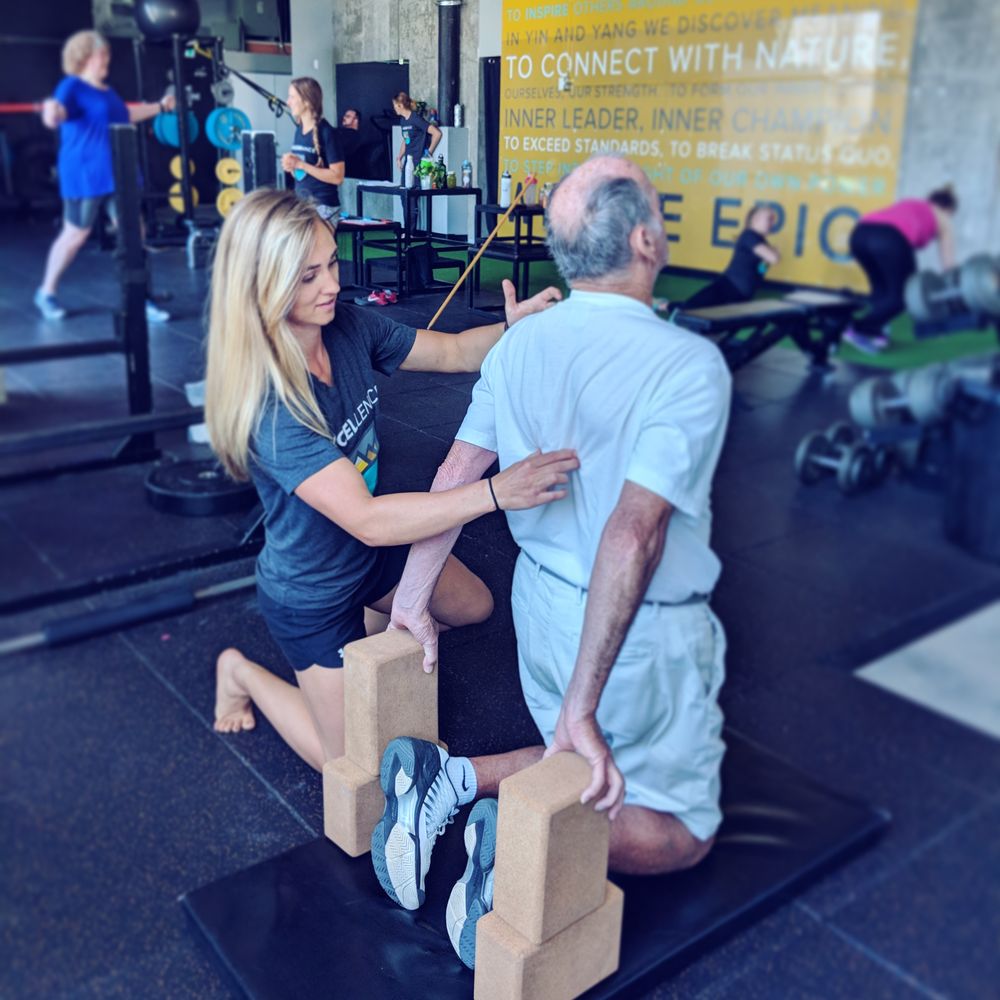
The Ability to Get Up From the Floor Matters
Getting down to the floor is something younger adults rarely think about.
They sit down, kneel, play with children, reach underneath furniture, and stand again without considering the movement.
As people age, maintaining this ability can become increasingly valuable.
Floor transitions require a combination of:
- Strength
- Mobility
- Coordination
- Balance
A well-rounded fitness program can help develop these qualities rather than focusing exclusively on gym performance.
Balance Deserves Attention Before It Becomes a Problem
Balance is another ability people often appreciate only after it becomes more challenging.
Good balance involves communication between multiple systems in the body.
Training can include exercises that appropriately challenge stability and body awareness.
This does not mean every workout needs to involve standing on unstable equipment.
Many traditional exercises naturally develop balance and control when performed appropriately.
The important point is maintaining the ability to control the body confidently.
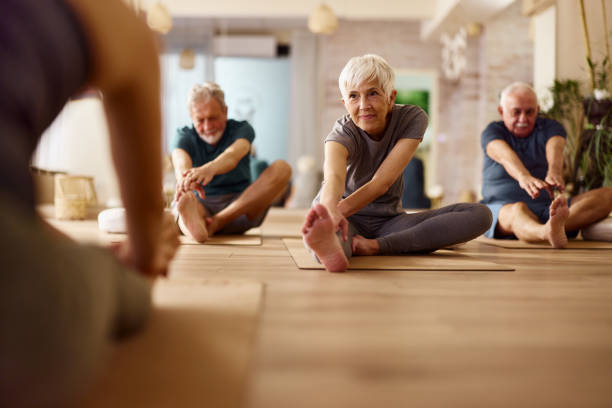
Mobility Helps Preserve Movement Options
Strength alone does not guarantee comfortable movement.
The body also needs useful ranges of motion.
Mobility can influence everyday activities such as:
- Reaching overhead
- Bending down
- Turning
- Squatting
- Walking
- Climbing stairs
For adults throughout Ottawa who spend much of their working day seated, maintaining movement variety can become particularly valuable.
Training can combine mobility and strength rather than treating them as completely separate goals.
Power Is Another Useful Quality
Strength refers to the ability to produce force.
Power involves producing force quickly.
Although people often associate power with athletes, everyday life sometimes requires quick reactions.
Regaining balance after a small stumble, moving quickly when necessary, or responding to an unexpected physical demand can involve the ability to produce force efficiently.
Appropriate training can include movements designed to preserve different aspects of physical performance.
As always, exercise selection should reflect the individual’s current abilities and experience.
Cardiovascular Fitness Supports an Active Life
Healthy aging is not only about resistance training.
Cardiovascular fitness also contributes to everyday capability.
People rely on endurance when:
- Walking through airports
- Exploring new cities
- Hiking
- Cycling
- Climbing stairs
- Playing recreational sports
- Spending active days with family
Cardiovascular activity can take many forms.
Walking, cycling, paddling, hiking, and other activities can all contribute to an active lifestyle.
The best option is often one someone genuinely enjoys enough to continue doing.
Training Can Help Prepare for Retirement Goals
Many adults spend decades looking forward to retirement.
They imagine having more time for:
- Travel
- Golf
- Gardening
- Outdoor activities
- Family
- Hobbies
But these activities frequently require physical capability.
Travel can involve long walks, stairs, luggage, and hours exploring unfamiliar places.
Gardening requires bending, kneeling, carrying, and reaching.
Golf involves walking, rotation, and repeated movement.
Preparing physically for retirement can begin years before the final day at work.
Ottawa Provides Plenty of Reasons to Stay Capable
Living in Ottawa and the surrounding region creates countless opportunities for an active lifestyle.
Someone might spend one season cycling along local pathways and another skiing or snowshoeing.
Weekend activities might include exploring trails near the Ottawa-Gatineau region, walking along the Rideau Canal, playing recreational sports, golfing, or spending time outdoors with family.
Maintaining strength, mobility, balance, and endurance can make these experiences more accessible and enjoyable.
Fitness creates options.
Training in Your 40s and 50s Is Not Too Late
Some adults assume that because they were not particularly active earlier in life, beginning now will not make much difference.
That mindset can prevent people from discovering what they are still capable of achieving.
Fitness does not require a lifelong athletic background.
Someone can begin with their current abilities and progress gradually.
The appropriate starting point is simply where they are today.
At Under The Bar, we believe progress should be based on the individual rather than comparisons with younger people or experienced athletes.
Training in Your 60s and Beyond Can Still Have Purpose
Fitness does not suddenly become irrelevant after a certain birthday.
Goals may change, but purposeful training can remain valuable.
An older adult may care less about lifting the heaviest possible weight and more about:
- Remaining independent
- Maintaining strength
- Improving balance
- Moving comfortably
- Continuing hobbies
- Staying active with family
These are meaningful performance goals.
Training can be designed around them.
Independence Is Built Through Everyday Capabilities
Independence often depends on many small physical tasks.
Consider the ability to:
- Carry laundry
- Open heavy doors
- Climb stairs
- Bring groceries inside
- Perform household tasks
- Walk reasonable distances
- Get in and out of vehicles
Each task requires some combination of strength, balance, coordination, mobility, or endurance.
Maintaining these qualities can support greater confidence in everyday life.
Consistency Matters More Than Extreme Training
Preparing for healthy aging does not require exhausting workouts every day.
In fact, extreme approaches can make fitness harder to sustain.
A more useful strategy is developing a routine that can continue through:
- Busy work periods
- Family responsibilities
- Travel
- Seasonal changes
- Changing life stages
Two or three purposeful sessions performed consistently can often be more valuable than an unsustainable burst of intense training followed by months of inactivity.
Long-term goals require long-term thinking.
Recovery Becomes Part of Smart Training
As people move through adulthood, they may become increasingly aware of recovery.
That is not a weakness.
It is useful information.
Training creates a challenge, while recovery provides the opportunity to adapt.
Sleep, nutrition, hydration, stress, and overall activity all influence recovery.
A thoughtful program considers these factors rather than assuming more exercise is always better.
Progress Should Be Individual
Healthy aging does not have one universal benchmark.
For one person, progress might mean performing a confident squat.
For another, it might mean completing a hiking trip.
Someone else may want to carry their golf bag comfortably or play with grandchildren without becoming exhausted.
Personal goals create context for training.
This is why individualized coaching can be valuable.
Fitness Can Build Confidence About the Future
One of the less obvious benefits of becoming physically capable is confidence.
When someone regularly practices lifting, carrying, squatting, stepping, balancing, and moving through different positions, everyday physical tasks can feel less intimidating.
Instead of wondering whether the body can handle something, people may begin trusting their abilities.
That confidence can encourage them to remain active.
Activity then provides additional opportunities to maintain fitness.
It can become a positive cycle.
The Under The Bar Approach to Long-Term Fitness
At Under The Bar, we believe training should provide value beyond today’s workout.
Our coaching focuses on helping clients build physical qualities that support their actual lives.
That may include:
- Strength
- Mobility
- Movement quality
- Balance
- Confidence
- Sustainable fitness habits
Programs should reflect the person, their current abilities, and the life they want to continue living.
For clients throughout Ottawa, Kanata, Nepean, Barrhaven, Orleans, Stittsville, and nearby communities, the objective is not simply being “good at the gym.”
It is becoming more prepared for life outside it.
Start Training for the Future Before You Need To
It is easy to wait until something becomes difficult before paying attention to it.
People often think about mobility only after feeling stiff.
They think about balance only after becoming less confident.
They think about strength only when everyday objects start feeling heavier.
A more proactive approach is to develop these qualities while they are still available.
Fitness can be preparation rather than reaction.
The habits built today may help create more options tomorrow.
Final Thoughts
Imagine yourself ten, twenty, or thirty years from now.
What do you hope you will still be doing?
Perhaps you want to travel.
Maybe you want to hike, golf, garden, cycle, ski, or enjoy long walks.
Perhaps the goal is simpler: living independently, carrying your own groceries, climbing stairs confidently, and staying actively involved with the people you love.
Those are fitness goals too.
For adults throughout Ottawa and surrounding communities, purposeful training can help build the strength, mobility, balance, and physical confidence needed to continue pursuing meaningful activities throughout life.
The future may feel far away.
But the physical foundation for that future is being built today.
Train Today for the Life You Want Tomorrow
If you want your fitness routine to support more than short-term results, Under The Bar can help you take a purposeful approach to long-term physical capability.
Our personalized coaching helps clients train according to their current abilities while working toward the strength, movement, and confidence they want for the years ahead.
Contact Under The Bar to learn more about training in the Ottawa area.
📞 Call: (343) 800-LIFT
📧 Email: underthebarpro@gmail.com
Build strength for today. Preserve capability for tomorrow. Train for a lifetime with Under The Bar.