Saturday morning arrives, and suddenly the week looks very different.
The office chair is replaced by a bicycle saddle. Work shoes become golf shoes. Someone who spent most of Monday through Friday sitting behind a computer is suddenly running across a soccer field, paddling on the water, hiking a trail, playing tennis, or stepping onto the ice.
For many adults throughout Ottawa, recreational sport is one of the best parts of the week.
It provides movement, competition, social connection, and something enjoyable to look forward to. But participating in a sport and physically preparing for that sport are not always the same thing.
At Under The Bar, we believe recreational athletes can benefit from training that develops physical qualities beyond those repeatedly used in their favourite activity.
Adults throughout Ottawa, Kanata, Nepean, Barrhaven, Orleans, Stittsville, and surrounding communities do not need to compete professionally to train with purpose.
Whether the goal is playing another round of golf comfortably, enjoying longer cycling routes, returning to recreational hockey, improving confidence on the trails, or simply feeling more capable during weekend activities, structured training can help build a stronger foundation.
Playing a Sport Is Not Always Complete Training
Many people assume that participating regularly in their favourite activity provides everything their body needs.
Sport certainly provides exercise.
But most sports repeatedly emphasize particular movements while giving less attention to others.
Cyclists, for example, spend significant time performing repeated lower-body movements in a relatively fixed position.
Golfers repeatedly rotate in a preferred direction.
Runners perform thousands of repetitions of a similar movement pattern.
Recreational hockey players experience short bursts of intense movement.
None of these activities is inherently a problem.
The point is simply that sport participation and well-rounded physical preparation serve different purposes.
Strength Training Can Complement Recreation
Strength training can help develop the physical capacity used during many recreational activities.
A cyclist still benefits from strong legs and hips.
A golfer still needs strength to control movement.
A paddler relies on the torso, shoulders, back, and hips.
A hiker needs lower-body strength to navigate hills and uneven terrain.
Rather than replacing sport, gym training can complement it.
The objective is to develop physical qualities that help someone feel prepared for the activities they already enjoy.
Weekend Warriors Face a Unique Challenge
Many recreational athletes have an unusual weekly pattern.
Monday through Friday may involve:
- Desk work
- Driving
- Meetings
- Limited movement
- Long periods of sitting
Then the weekend arrives and physical demand increases dramatically.
Someone might suddenly spend three hours cycling, play an entire recreational soccer game, walk eighteen holes of golf, or hike for several hours.
The contrast between weekday inactivity and weekend intensity can be significant.
Purposeful training during the week can help bridge that gap.
Golf Requires More Than a Good Swing
Ottawa and the surrounding region provide plenty of opportunities for golfers.
Golf may not look physically demanding in the same way as sprinting or hockey, but playing well and comfortably involves several physical qualities.
These can include:
- Rotation
- Balance
- Coordination
- Lower-body strength
- Core control
- Shoulder movement
Golfers also spend hours walking, standing, bending, and repeatedly swinging.
A fitness program designed around general physical capability can complement technical golf practice.
The gym does not teach someone how to swing a club.
It can help prepare the body performing the swing.
Cyclists Need More Than Time on the Bike
Ottawa’s cycling routes make riding a popular activity throughout warmer months.
Cycling is excellent physical activity, but cyclists spend significant time in one repeated position.
Complementary training can introduce movements that cycling does not emphasize as heavily.
That may include:
- Upper-body strength
- Different hip movements
- Core control
- Loaded carries
- Movement in different planes
A well-rounded body can support an active cycling lifestyle without requiring every workout to look like cycling.
Runners Can Benefit From Strength Too
Running itself requires repeated force production.
While running practice is necessary for becoming a better runner, strength training can develop qualities that support overall physical capacity.
Exercises can target:
- Hips
- Legs
- Calves
- Core
- Upper body
Training can also introduce controlled movement patterns that differ from the thousands of similar steps accumulated during running.
The goal is not to turn every runner into a powerlifter.
It is to create a more complete physical foundation.
Hiking Demands More Than Endurance
A long hike can reveal weaknesses that are difficult to notice during ordinary daily life.
Uphill sections challenge the legs and cardiovascular system.
Descending requires control.
Uneven terrain challenges balance and coordination.
Carrying a backpack adds another demand.
For Ottawa-area residents who enjoy exploring trails around the National Capital Region and beyond, training can help prepare for these experiences.
Squatting, stepping, hinging, carrying, and balancing all have practical relevance.
Paddling Places Unique Demands on the Body
Kayaking, canoeing, and paddleboarding are popular warm-weather activities around Ottawa.
These activities involve coordinated movement between the upper body, torso, and hips.
A paddler may benefit from training that develops:
- Back strength
- Shoulder control
- Core stability
- Rotation
- Grip
- General endurance
Again, gym training does not replace time on the water.
It provides another way to build physical capacity.
Recreational Hockey Is Still Physically Demanding
Many adults return to recreational hockey after spending the day at a desk.
Once the game begins, the physical demands change dramatically.
Hockey involves:
- Acceleration
- Deceleration
- Direction changes
- Balance
- Coordination
- Repeated bursts of effort
General strength and conditioning can help recreational players prepare for these demands.
Training can also be adjusted throughout the season depending on how often someone plays and how well they are recovering.
Tennis and Pickleball Require Movement in Multiple Directions
Court sports involve much more than hitting a ball.
Players move:
- Forward
- Backward
- Sideways
- Diagonally
They accelerate, stop, rotate, reach, and change direction.
Fitness training can help develop general strength and movement control that supports these varied demands.
This becomes especially relevant for adults returning to court sports after years away.
Enthusiasm may return immediately.
Physical preparedness sometimes needs more time.
Training Should Reflect the Sport Without Copying It
One mistake in sports-focused fitness is trying to make every gym exercise visually resemble the sport.
A golfer does not need to perform every exercise while mimicking a golf swing.
A hockey player does not need every movement to resemble skating.
A cyclist does not need to spend the entire gym session recreating cycling.
General physical qualities matter.
Strength.
Balance.
Mobility.
Coordination.
Power.
Endurance.
The gym can develop these qualities while actual sport practice develops sport-specific skill.
The Off-Season Is an Opportunity
Some recreational activities in Ottawa are highly seasonal.
When the golf clubs are stored for winter or outdoor cycling becomes less practical, people sometimes reduce their activity significantly.
The off-season can instead become an opportunity.
Training during this period may focus on:
- General strength
- Movement quality
- Mobility
- Conditioning
- Areas that receive less attention during the season
Rather than starting from zero every spring, someone can maintain a fitness foundation year-round.
In-Season Training May Need to Look Different
When someone is actively participating in a sport several times per week, training demands change.
Adding excessive gym volume on top of recreational activity may create more fatigue than benefit.
This is where individualized programming becomes valuable.
Training frequency and intensity can be adjusted based on:
- Sport schedule
- Recovery
- Work demands
- Fitness goals
- Current physical condition
The goal is supporting recreation rather than competing with it.
Recovery Is Part of Athletic Performance
Weekend athletes sometimes behave as though recovery is only relevant to professionals.
It is not.
Someone playing recreational hockey after a demanding workweek still needs recovery.
Someone completing a long cycling ride still needs recovery.
Important factors include:
- Sleep
- Hydration
- Nutrition
- Stress
- Training load
A balanced program considers how all of these pieces interact.
Warm-Ups Should Prepare You for What Comes Next
A purposeful warm-up is more than simply raising body temperature.
It can help prepare the movements and physical qualities needed for the upcoming activity.
The preparation for a gym strength session may differ from preparation for a recreational hockey game or cycling ride.
The goal is readiness.
A thoughtful warm-up transitions the body from what it was doing previously into what it is about to do.
For Ottawa professionals going directly from a desk to physical activity, that transition can be especially useful.
Training Can Help Maintain Recreation as Life Changes
At 25, someone may recover quickly from a weekend tournament.
At 45, they may still enjoy the same sport but discover that preparation and recovery deserve more attention.
That does not mean giving up the activity.
It means adapting.
Fitness programming can evolve as:
- Work demands change
- Family responsibilities increase
- Recovery needs shift
- Recreational goals change
The objective is helping people continue participating rather than assuming certain activities automatically belong only to younger adults.
You Do Not Need to Be Elite to Train Like Your Goals Matter
The phrase “sports performance” sometimes sounds as though it belongs exclusively to competitive athletes.
But performance simply means being able to do something.
A recreational cyclist wants to perform well enough to enjoy a long ride.
A golfer wants to complete a round comfortably.
A hiker wants enough capacity to enjoy the trail rather than merely survive it.
A hockey player wants to finish the game feeling capable.
Those goals matter.
Training can reflect them.
Avoid Comparing Your Training With Professional Athletes
Professional athletes organize much of their lives around performance.
Most adults cannot—and do not need to—do the same.
A busy Ottawa professional may be balancing:
- A full-time career
- Family
- Commuting
- Household responsibilities
- Social commitments
Their training should reflect that reality.
Copying the routine of an elite athlete may provide far more volume and complexity than necessary.
The best program is the one appropriate for the person following it.
Consistency Across the Year Matters
Many recreational athletes follow a cycle.
They become highly active when their sport is in season, stop almost completely afterward, and then attempt to regain fitness immediately when the next season begins.
A more sustainable approach maintains some level of activity throughout the year.
The exact focus can change.
Training does not need to remain identical in January and July.
But maintaining a foundation can make transitions between seasons easier.
Ottawa Is an Ideal Place to Train for an Active Life
One of the greatest benefits of fitness is having more options.
Ottawa residents can move between:
- Cycling
- Golf
- Hiking
- Hockey
- Skiing
- Skating
- Paddling
- Running
- Court sports
- Recreational leagues
throughout the year.
A well-rounded fitness program can support that variety.
Instead of training only to look fit, people can train to use their fitness.
The Under The Bar Approach
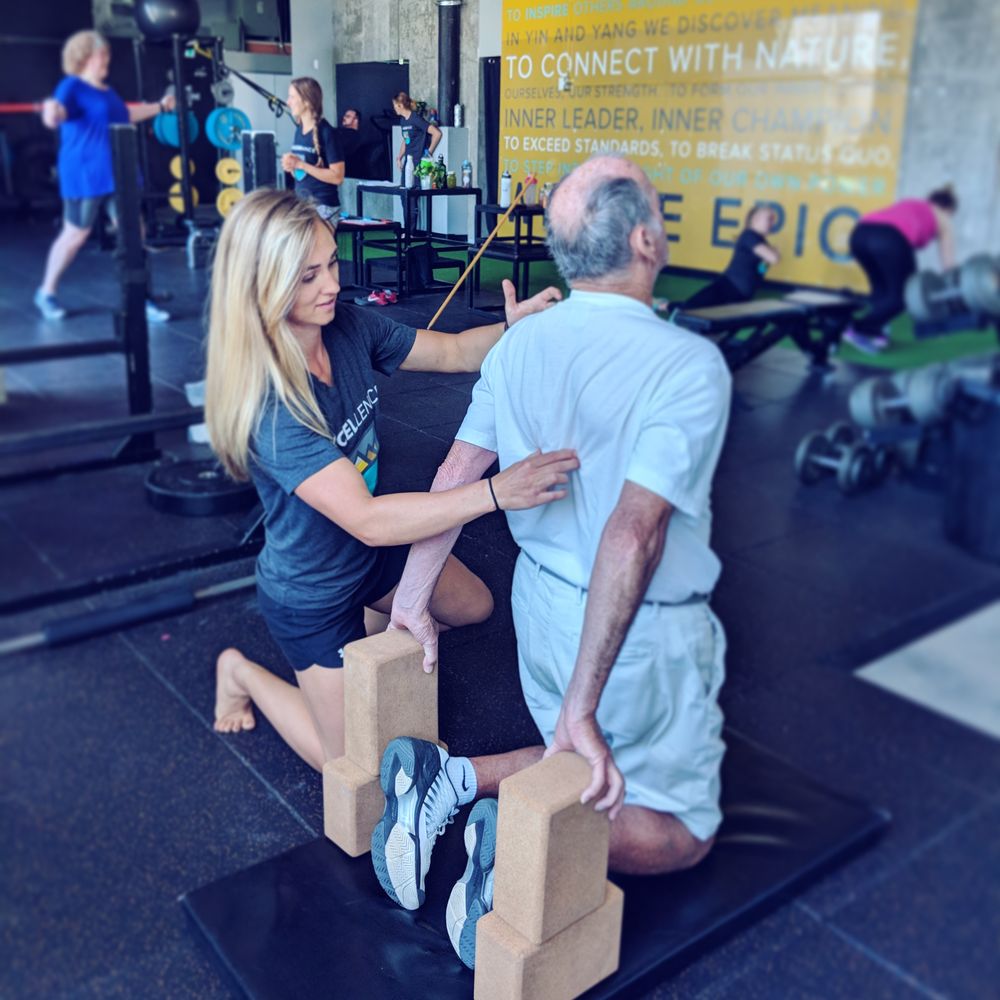
At Under The Bar, we believe training should connect to real goals.
For one client, that might mean becoming stronger for everyday life.
For another, it might mean staying active as they age.
For a recreational athlete, it may mean developing the physical capacity that supports a favourite sport.
Our coaching considers the individual rather than applying the same workout to everyone.
We look at factors such as:
- Current abilities
- Training experience
- Recreational activities
- Schedule
- Recovery
- Personal goals
From there, training can be structured with purpose.
Final Thoughts
Playing the sport you love is one of the best reasons to stay fit.
But participating in a sport and preparing your body for its demands are not always the same thing.
Purposeful training can help recreational athletes develop strength, mobility, balance, conditioning, and overall physical capacity beyond the movements repeatedly performed during their favourite activity.
For adults throughout Ottawa, Kanata, Nepean, Barrhaven, Orleans, Stittsville, and surrounding communities, that can mean more than better gym performance.
It can mean feeling better prepared for the golf course, cycling route, hockey rink, hiking trail, paddling trip, running path, or recreational league.
You do not need a professional contract for your performance to matter.
Sometimes the goal is simply being able to keep doing what you love.
Train for the Activities You Look Forward To
If you want your workouts to support your favourite sport or recreational activities, Under The Bar can help you develop a more purposeful training approach.
Our personalized coaching is designed around your current abilities, lifestyle, and goals so your gym time can contribute to what matters outside the gym.
Contact Under The Bar to learn more about personalized fitness coaching in the Ottawa area.
📞 Call: (343) 800-LIFT
📧 Email: underthebarpro@gmail.com
Train beyond the game. Build capability for the activities you love. Train with purpose at Under The Bar.